 MakerGain
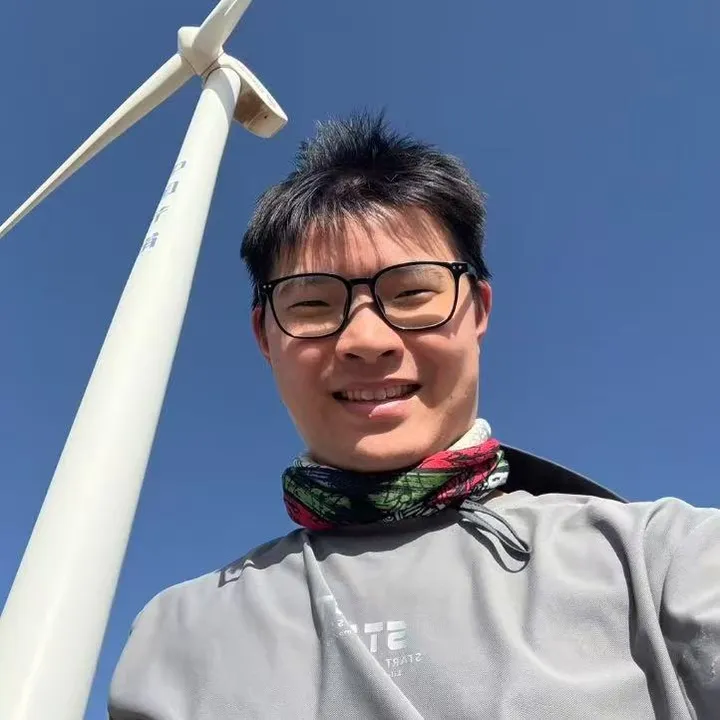
Photo: MakerJackie, via makerjackie.com[1]
His phone was stuffed with photos and running out of storage. Jackie downloaded several cleanup tools, checked the paywalls—168 yuan for a lifetime membership, 68 yuan a year—decided that was too steep, and set out to write his own. [2]
That photo-cleaning app became OnePhoto. On a podcast, he priced it at 9.9 yuan a year, alongside another tier at 29.9 yuan; the product page describes core cleanup as free, with Pro unlocked either annually or for life. [2] OnePhoto | One Apps[3]
Photos, videos, screenshots, and Live Photos can be swiped through one by one, skimmed two rows side by side, or grouped by time and location. Deletions and favorites enter a staging queue first and only go through once the entire batch is reviewed; until you confirm, not a single file in your library is touched. Pro adds queues for similar photos and large files, on-device compression, and long-term statistics. [3]
Jackie is an indie developer and digital nomad. Before any of this, he spent roughly six years as an AI speech algorithm engineer. After quitting, he took a break and drove from Shenzhen all the way to Xinjiang; on the road, he slept in his car with his laptop beside him, writing code as he traveled. When his mid-August retrospective "Over 20 Apps in Two Months: Is It Industrial Trash?" went live, he was mostly staying put in Zhuhai. [1] "Over 20 Apps in Two Months: Is It Industrial Trash?"[4]
Two months, more than 20 iOS apps. Every line of code lives in a single repository—mainly Swift, with some Flutter and Expo mixed in.
More revealing than the headcount is the assembly line behind it. First he built a template tailored to his own design style, then packaged competitor research, product requirement docs, prototype generation, template-based app scaffolding, verification testing, and publishing—one step at a time—into callable skills. As he describes it in his retrospective, he can feed in a single sentence of requirements and let AI carry an app from zero to App Store release without him intervening along the way. [4]
For the version of this workflow he sells publicly, the product page draws clear boundaries: it is not an unattended one-click generator. Passwords, two-factor authentication, legal and compliance questionnaires, payments, and final App Review submission still require the user's own confirmation. [5]
On an ordinary day, it works like this: a new idea crosses his mind, or his Codex quota resets for the day. He pulls a concept from his idea backlog, hands it off, lets it run nonstop for a dozen to twenty hours, and finally opens the build on his phone to test it himself. [4]
The bill tells the other side of the story. Over the preceding 30 days, he burned roughly 74.1 billion tokens—primarily on Codex, followed by Claude, Grok, and Kimi, alongside Cursor and OpenCode—spending around 4,000 to 5,000 yuan a month on AI subscriptions and tools. He later recalled on the podcast that his monthly subscriptions started around 1,000 yuan before climbing to 5,000 or 6,000 yuan. [4] "'Just Living Happily Is Enough': One Indie Developer's 183 Worlds"[2]
Revenue has trickled back far more slowly. The only app he genuinely promoted was the photo cleaner: over 3,000 downloads and $97 in revenue, according to his dashboard at the time. Most of the other apps had only just launched with little marketing and earned far less; a few were shelved right after they were built. He rates his own distribution as terrible—regularly pulling just over 1,000 views on Bilibili with the rare 20,000-to-30,000 spike, and an occasional breakout clip on Douyin. Lately, he has been testing Grok to generate promotional videos automatically. [4]
In that same retrospective, his iOS catalog totaled more than 9,000 downloads and $152 in sales; after Apple's commission, he says he took home just over $100. Limited-time free promotions kept earnings even thinner relative to downloads. By the time the August 19 podcast was released, cumulative downloads had crossed 10,000 and revenue had surpassed $150. [4] "'Just Living Happily Is Enough': One Indie Developer's 183 Worlds"[2]
Image: The App Store Connect app list MakerJackie shared in his two-month development retrospective[4]
Shipping got faster and faster, yet the mental friction never went away. For a long stretch, half of his daily energy went to interrogating himself: after building all these apps, with low revenue, few users, and mountains of tokens burned, did any of it actually matter? Beneath that sat a colder question—if AI ships a single new version, could everything he is building suddenly lose its meaning? [4]
He often brought those spirals straight to AI, for what he calls "AI psychological therapy." Every month, there are always a few days when he wants to do nothing at all—just stay home, play video games, and zone out.
What convinced him he was finally living the life he wanted came down to two concrete moments. The first was turning down outsourcing work: after taking on a few client projects, he realized his gut was resisting, and in one sudden flash felt he should say no and listen to his body. What he refuses are ill-defined gigs taken purely for cash; projects that line up with his interests, he is still happy to accept. The second happened while building Shape of the World: he had the Andromeda galaxy and the Milky Way collide six billion years from now, finished the page, and stared at his screen for over an hour, struck simply by how astonishing the universe is. [2]
On the podcast a few days later, he put that mindset more plainly: what actually helped wasn't suppressing self-blame, but "fully accepting yourself." "There is no such thing as self-discipline. Don't berate yourself while you're playing games." He offered an analogy—when a baby won't stop crying, a mother wonders if it's hungry or bored instead of scolding it for crying; getting lost in games is the same thing: your body is crying, while your rational mind keeps beating it up. [2]
More than a dozen apps live on the App Store, and total iOS income comes to just over $100. What cheers him up is modest: earning roughly enough each day for a Pinhaofan budget takeout meal. His own products aren't yet his main source of income—he still relies largely on software outsourcing and paid knowledge products. Another bright spot came from Shape of the World: the project, with 183 interactive worlds, drew roughly 30,000 views across Douyin and WeChat Channels, over 3,000 monthly active users, and more than 10,000 yuan in token sponsorship. [4]
He describes the 20-plus-app push as casting a wide net, though with rules of his own: the baseline is building tools he will actually use himself, shipping only the core feature in version one, and testing the waters on Xiaohongshu; if people show interest, he keeps investing, and if nobody bites, he lets it go. After finishing OneWish and a ukulele-learning app, he realized they weren't all that useful to him, so he shelved them with no plans to push them to the store. Meanwhile, the photo cleaner, a tuner, the file previewer Zhen Yi Yue ("Reviewed by the Emperor"), the PDF scanner OneScan, and the meditation app OneZen have already drawn feedback from early users. [2]
In his August 15 retrospective, he put the doubt right in the headline: "Over 20 Apps in Two Months: Is It Industrial Trash?" On the podcast a few days later, he laid out the one knot still untied: he is doing work he enjoys and making a bit of money, just not big money yet—that is his one remaining dilemma. [4] "'Just Living Happily Is Enough': One Indie Developer's 183 Worlds"[2]
Zhuhai is right by the sea—uncrowded, scenic. He has no plans to leave anytime soon. Driving from Shenzhen to Xinjiang took more than three months, and in the final month he was practically fleeing the trip; what the road left him wasn't the myth that "far away is always better," but a looser takeaway: whatever happens, whether you make the right choice or the wrong one, you will still find joy and novelty—just treat it as an adventure. [2]
Whether more than 20 apps amount to industrial trash is a question that will linger for a long time. Chances are he will keep building first and deciding whether to continue later—after all, he has already spent a year hesitating in place, and he knows what that feels like.